









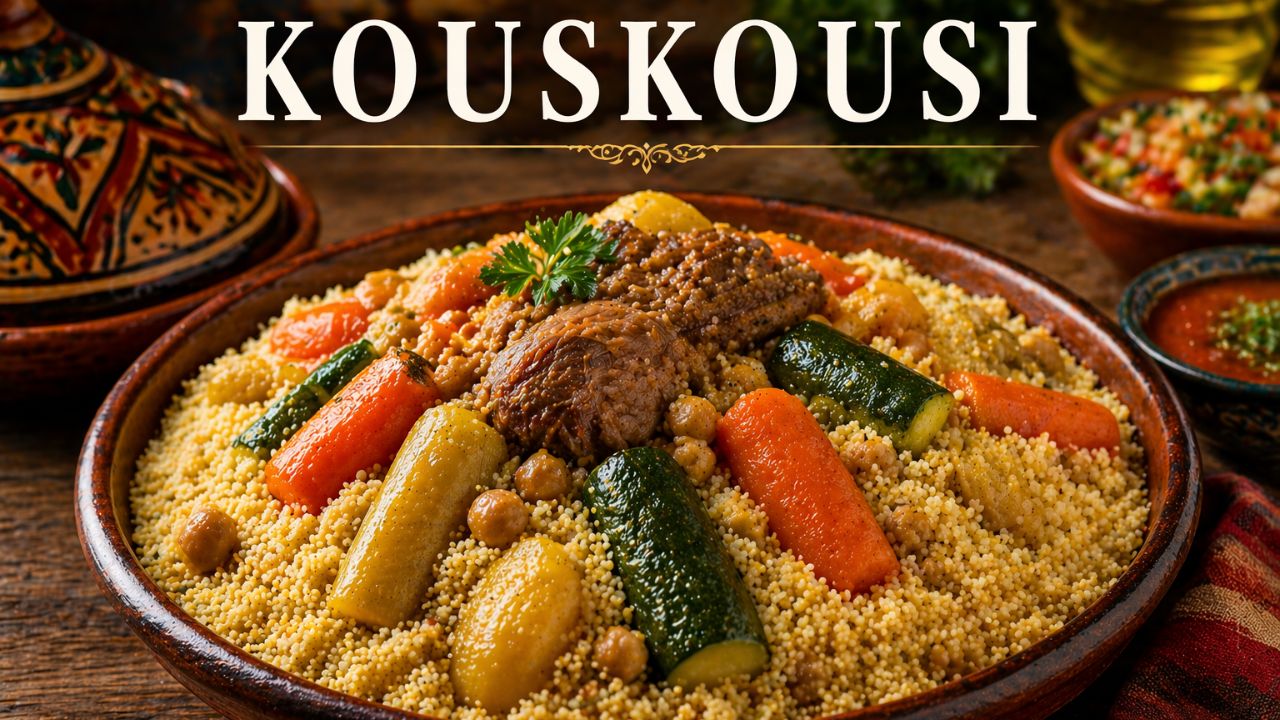
Kouskousi is one of those foods people recognize but rarely understand fully. Many confuse it with a grain, while others see it as just another side dish like rice. In reality, kouskousi carries a long history, deep cultural roots, and a unique place in global cuisine. It is simple in appearance but surprisingly versatile when used in cooking. Once you understand what kouskousi really is, it becomes easier to see why it has remained popular for centuries.
Understanding what kouskousi really is
Kouskousi is made from semolina, which comes from durum wheat, and is formed into tiny granules that resemble grains. Despite its look, it is technically a form of pasta rather than a cereal grain. The process involves mixing semolina with water and rolling it into small pellets. These pellets are then steamed, dried, and later cooked again before serving. This dual cooking method is what gives kouskousi its soft and fluffy texture.
The simplicity of kouskousi is part of its appeal, but its ability to absorb flavors is what makes it stand out. It acts as a base that can take on spices, broths, and sauces easily. This makes it suitable for both savory and sweet dishes. Because of this flexibility, kouskousi has spread far beyond its original region and is now used in kitchens around the world.
The historical roots of kouskousi
The origins of kouskousi go back more than two thousand years to North Africa. It was first prepared by Berber communities who relied on wheat as a staple crop. Over time, the dish became a central part of daily meals and special gatherings. Its preparation was often a communal activity, bringing families together.
Kouskousi also holds symbolic value in many cultures. In countries like Morocco and Algeria, it is traditionally eaten on Fridays after communal prayers. The act of sharing a large plate reflects unity and hospitality. This cultural significance has helped preserve the tradition of kouskousi even as modern cooking methods have changed.
How kouskousi is traditionally and modernly prepared
Traditional preparation of kouskousi is a slow and careful process that requires patience. The semolina is hand-rolled into granules and then steamed multiple times in a special pot called a couscoussier. Each round of steaming adds to the texture, making it light and airy. The process can take hours but results in a deeply satisfying dish.
Modern preparation methods are far more convenient. Most store-bought kouskousi is pre-steamed and dried, allowing it to cook in just a few minutes. This version only requires hot water or broth to rehydrate. While faster, it still retains much of the original taste and texture. This balance between tradition and convenience has helped kouskousi remain relevant today.
Different types of kouskousi you should know
Kouskousi is not limited to a single form, and its variations change the way it is used in cooking. The size of the granules plays a big role in texture and preparation style. Understanding these types helps in choosing the right one for each dish.
- Moroccan kouskousi is the smallest and most commonly used type
- Israeli or pearl kouskousi is larger and has a chewy texture
- Lebanese kouskousi is the largest and often used in hearty meals
Each type brings a different experience to the table. Smaller grains tend to be softer and lighter, while larger ones feel more substantial. Despite these differences, all forms of kouskousi share the same base ingredient and cooking foundation.
Taste and texture profile of kouskousi
Kouskousi has a mild flavor that can be described as slightly nutty and warm. On its own, it does not overpower other ingredients, which makes it easy to pair with a wide range of foods. This neutral taste allows it to adapt to different cuisines and cooking styles. It can take on spices, herbs, and sauces without losing its identity.
The texture of kouskousi is soft and fluffy when prepared correctly. Each grain remains separate rather than clumping together. This creates a light and airy feel that contrasts well with heavier ingredients like meat or thick sauces. The balance of taste and texture is what keeps kouskousi interesting even in simple dishes.
Common ways kouskousi is used in meals
Kouskousi fits into many types of meals, from traditional dishes to modern recipes. Its versatility makes it a reliable choice for both everyday cooking and special occasions. It can be served hot, cold, sweet, or savory depending on the preparation.
Some popular uses include:
- Serving it with meat stews such as lamb or chicken
- Mixing it into fresh salads with vegetables and herbs
- Using it as a base for roasted vegetables
- Preparing sweet versions with milk, sugar, and dried fruits
These different uses show how adaptable kouskousi can be. It works equally well as a main component or a supporting side. This flexibility has helped it become a staple in many households beyond its place of origin.
Nutritional value and dietary considerations
Kouskousi provides a good source of carbohydrates, making it a reliable energy option. It also contains small amounts of protein and fiber, depending on how it is processed. While it is not considered a superfood, it still contributes to a balanced diet when paired with other ingredients. Adding vegetables and lean proteins can make a kouskousi-based meal more complete.
However, kouskousi is made from wheat, which means it contains gluten. This makes it unsuitable for people with gluten intolerance or celiac disease. For those who can consume it, moderation is key. Like other carbohydrate-rich foods, it should be balanced with other nutrients for a healthy diet.
Why kouskousi continues to grow in popularity
Kouskousi has managed to stay relevant because it fits modern lifestyles without losing its traditional roots. It cooks quickly, stores well, and works with many different flavors. This makes it appealing to people who want simple but satisfying meals. At the same time, it still carries a sense of tradition and authenticity.
The global spread of food culture has also played a role in its popularity. As more people explore international cuisines, kouskousi naturally finds its way into new recipes. Chefs and home cooks alike experiment with it, creating fresh takes on classic dishes. This ongoing adaptation keeps kouskousi from becoming outdated.
Practical tips for cooking better kouskousi
Cooking kouskousi properly can make a noticeable difference in the final dish. Small adjustments in technique can improve both texture and flavor. Paying attention to details helps avoid common mistakes like clumping or blandness.
- Use broth instead of plain water for more flavor
- Fluff the grains with a fork after cooking
- Avoid over-soaking to prevent mushy texture
- Add olive oil or butter for a richer finish
These simple steps can elevate even a basic preparation. Once you get comfortable with cooking kouskousi, it becomes an easy addition to your regular meals.
Conclusion
Kouskousi is more than just a quick side dish or a substitute for rice. It carries history, culture, and flexibility that few foods can match. From its origins in North Africa to its place in modern kitchens, it continues to adapt without losing its identity. Its simple ingredients and wide range of uses make it accessible to almost anyone. Whether used in traditional recipes or new creations, kouskousi remains a reliable and meaningful part of global cuisine.
FAQs
- What is kouskousi made from?
Kouskousi is made from semolina, which comes from durum wheat. The semolina is mixed with water and formed into small granules. - Is kouskousi the same as rice?
No, kouskousi is not rice. It may look similar, but it is actually a type of pasta made from wheat. - How long does kouskousi take to cook?
Most modern kouskousi cooks in about 5 to 10 minutes. Traditional methods take much longer due to repeated steaming. - Can kouskousi be used in sweet dishes?
Yes, kouskousi can be prepared with milk, sugar, and dried fruits to create sweet versions. - Is kouskousi healthy?
Kouskousi can be part of a balanced diet when combined with vegetables and protein. However, it contains gluten and should be avoided by those with gluten intolerance.