








The term uvlack is gaining attention across industries that rely on surface finishing, protection, and fast production cycles. While it may sound unfamiliar at first, its core idea is simple: a coating that cures instantly when exposed to ultraviolet light. This makes uvlack very different from traditional paints or varnishes that take hours or even days to dry. As more manufacturers look for efficient and cleaner solutions, this technology is becoming harder to ignore. Understanding how uvlack works and where it fits can give you an edge whether you’re a writer, business owner, or just curious about modern materials.
what uvlack actually means in practical terms
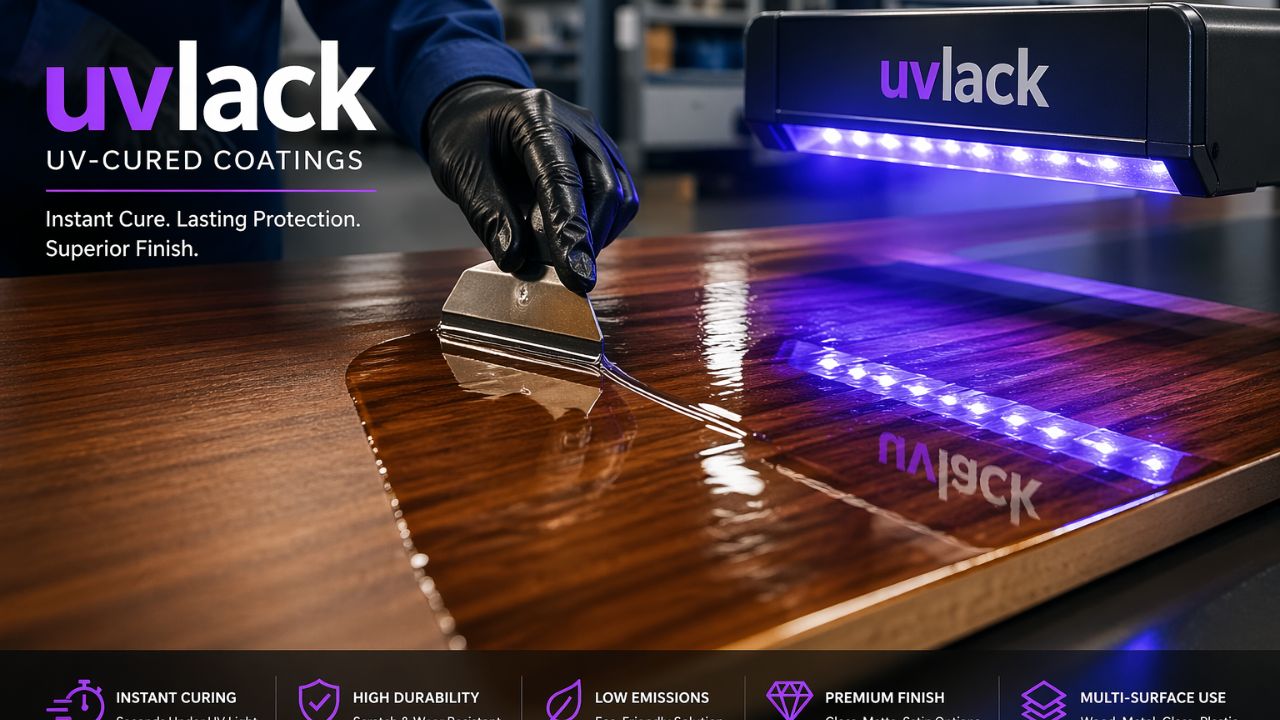
In most real-world use, uvlack refers to a UV-curable coating or resin that hardens when exposed to ultraviolet light. It starts as a liquid and stays that way until UV exposure triggers a chemical reaction. Once exposed, it quickly transforms into a solid, durable layer. This level of control is one of the main reasons uvlack stands out compared to traditional coatings.
The word itself is sometimes used loosely, which creates confusion. In industrial settings, it is closely tied to UV coatings used in printing, furniture, and electronics. In broader discussions, uvlack can also refer to a newer class of advanced surface technologies. Regardless of context, the defining feature remains the same: fast curing through UV light.
how the uvlack curing process works
The science behind uvlack is surprisingly straightforward once you break it down. The liquid contains special compounds called photoinitiators. These compounds react when exposed to ultraviolet light and trigger a rapid hardening process. This reaction forms a strong and stable coating within seconds.
Unlike air-drying paints, uvlack does not cure unless exposed to UV light. This gives manufacturers full control over timing and application. It also reduces errors since the material won’t start drying unexpectedly. The result is a cleaner, faster, and more predictable finishing process.
key characteristics that define uvlack coatings
Several features make uvlack different from conventional coating systems. These characteristics explain why industries are shifting toward this technology.
- instant curing within seconds under UV light
- strong resistance to scratches and wear
- minimal emission of harmful chemicals
- ability to produce gloss, matte, or satin finishes
- longer lifespan compared to traditional coatings
Each of these traits contributes to both performance and efficiency. For example, instant curing speeds up production lines, while durability reduces maintenance costs. This combination is what gives uvlack its growing reputation.
major industries using uvlack today
uvlack is not limited to one niche; it is used across multiple industries that require reliable surface protection. Its flexibility makes it suitable for both large-scale manufacturing and small creative applications. As demand for high-performance finishes increases, more sectors are adopting it.
In furniture manufacturing, uvlack is used to create smooth and scratch-resistant surfaces. It allows producers to finish products quickly without sacrificing quality. In the automotive industry, it is applied to protect parts from UV damage and environmental wear. Electronics manufacturers use it to coat surfaces that need to resist fingerprints and minor scratches.
Another important area is packaging and printing. uvlack is widely used for spot varnishing to give packaging a premium look. This is especially common in high-end product boxes where visual appeal matters. Even DIY users have started experimenting with uvlack for crafts and small repair projects.
advantages of choosing uvlack over traditional coatings
The shift toward uvlack is not random; it is driven by clear advantages over older methods. Traditional coatings often involve long drying times and higher emissions. In contrast, uvlack offers a faster and cleaner alternative.
Here are some of the main benefits that make uvlack appealing:
- significantly reduced drying time improves productivity
- lower emissions make it a more environmentally friendly option
- stronger finish increases durability and product lifespan
- precise control over curing reduces waste and errors
- consistent results across large production batches
These benefits are especially valuable in industries where time and quality directly affect profit. Faster turnaround means more output, and better durability means fewer returns or repairs. This is why many manufacturers are actively replacing older systems with uvlack.
comparison between uvlack and traditional coating methods
When you compare uvlack to traditional coatings, the differences become very clear. Traditional paints rely on air drying or heat, which takes time and can lead to inconsistencies. uvlack, on the other hand, cures instantly under controlled conditions. This difference alone can reshape an entire production process.
Another key difference is environmental impact. Traditional coatings often release volatile compounds into the air. uvlack reduces this problem by using a more controlled chemical reaction. It also produces a harder and more resistant surface, which adds long-term value.
Cost can be a factor when switching to uvlack, especially in the beginning. However, many businesses find that the long-term savings outweigh the initial investment. Reduced labor time and improved product quality often justify the change.
practical uses of uvlack in everyday applications
Although uvlack is often discussed in industrial terms, its applications are easy to relate to everyday life. Many products people use daily are finished with UV-cured coatings. These coatings improve both appearance and durability without most users even noticing.
For example, wooden furniture with a glossy finish often relies on uvlack technology. Smartphone casings and electronic devices also benefit from these coatings. Even printed materials like brochures and packaging use uvlack for added shine and protection.
DIY enthusiasts have also started using uvlack in small projects. From jewelry making to surface repairs, the quick curing process makes it very convenient. This growing accessibility is expanding its use beyond large industries.
challenges and limitations of uvlack
Despite its advantages, uvlack is not without limitations. One of the main challenges is the need for UV light equipment. Without proper exposure, the coating will not cure at all. This makes it less practical in environments where such equipment is not available.
Another limitation is material compatibility. Not all surfaces respond equally well to uvlack coatings. Some materials may require special preparation or may not bond effectively. This can add complexity to certain projects.
There is also an upfront cost to consider. Setting up UV curing systems can be expensive for small businesses. However, many find that the efficiency gains eventually balance out the cost.
future potential of uvlack in modern industries
The future of uvlack looks promising as technology continues to evolve. Researchers are working on improving formulations to make them even more efficient and versatile. This includes better adhesion, improved flexibility, and enhanced environmental performance.
There is also growing interest in combining uvlack with advanced materials like nanotechnology. This could lead to coatings that offer additional features such as self-cleaning or anti-bacterial properties. As industries push for smarter materials, uvlack is likely to play a bigger role.
Another area of growth is sustainability. As regulations around emissions become stricter, solutions like uvlack will gain more attention. Its lower environmental impact makes it a strong candidate for future manufacturing standards.
conclusion
uvlack represents a clear shift in how coatings are applied and used across industries. Its ability to cure instantly, reduce emissions, and provide durable finishes makes it a strong alternative to traditional methods. While it does come with some limitations, the benefits often outweigh the drawbacks, especially in large-scale production. As technology improves and adoption grows, uvlack is likely to become a standard solution rather than a niche option. Understanding its potential now puts you ahead of the curve in a space that is still evolving.
faqs
- what is uvlack used for
uvlack is used for coating surfaces like wood, plastic, metal, and printed materials to improve durability and appearance. - how does uvlack cure
uvlack cures when exposed to ultraviolet light, which triggers a chemical reaction that hardens the material instantly. - is uvlack environmentally friendly
uvlack is considered more eco-friendly than traditional coatings because it produces fewer emissions during the curing process. - can uvlack be used at home
yes, uvlack can be used for DIY projects, especially in crafts, but it requires a UV light source for curing. - why is uvlack becoming popular
uvlack is gaining popularity due to its fast curing time, strong finish, and lower environmental impact compared to traditional coatings.