








Electricity is part of nearly everything we use, yet most people don’t fully understand how it is measured. The term wattios often shows up in conversations about appliances, energy bills, and power usage, but its meaning is usually taken for granted. If you’ve ever checked the label on a device or wondered why your electricity bill increased, wattios play a direct role. This article breaks down what wattios are, how they work, and why they matter in everyday life. By the end, you’ll have a clear understanding that goes beyond simple definitions.
what wattios mean in simple terms
Wattios refer to the measurement of electrical power, which shows how quickly energy is being used at a given moment. In technical terms, one watt equals one joule of energy used per second, but you don’t need to think about physics to understand it. Imagine turning on a light bulb; the brightness and energy use at that instant are measured in wattios. The higher the wattios, the more power the device is using at that moment. This makes wattios a real-time indicator of energy demand.
When people talk about wattios, they are usually referring to how powerful a device is rather than how much electricity it consumes over time. For example, a 100-watt bulb uses more power at any given second than a 10-watt bulb. That difference directly affects how much strain is placed on your electrical system. Understanding wattios helps you compare devices easily. It also helps you make better choices when buying electronics.
how wattios relate to volts and amps
To fully understand wattios, it helps to see how they connect to other electrical terms. Power is calculated by multiplying voltage and current, which means wattios are the result of these two factors working together. Voltage represents the pressure of electricity, while current shows how much electricity is flowing. When combined, they give you the total power being used.
Here’s a simple way to look at it:
- Voltage (V): the force pushing electricity
- Current (A): the flow of electricity
- Wattios (W): the total power output
This relationship explains why devices with higher voltage or current often have higher wattios. It also helps when dealing with electrical setups like generators or solar panels. Knowing how wattios connect to volts and amps makes it easier to understand technical specifications. Over time, this knowledge becomes useful when troubleshooting or upgrading systems.
everyday examples of wattios in household devices
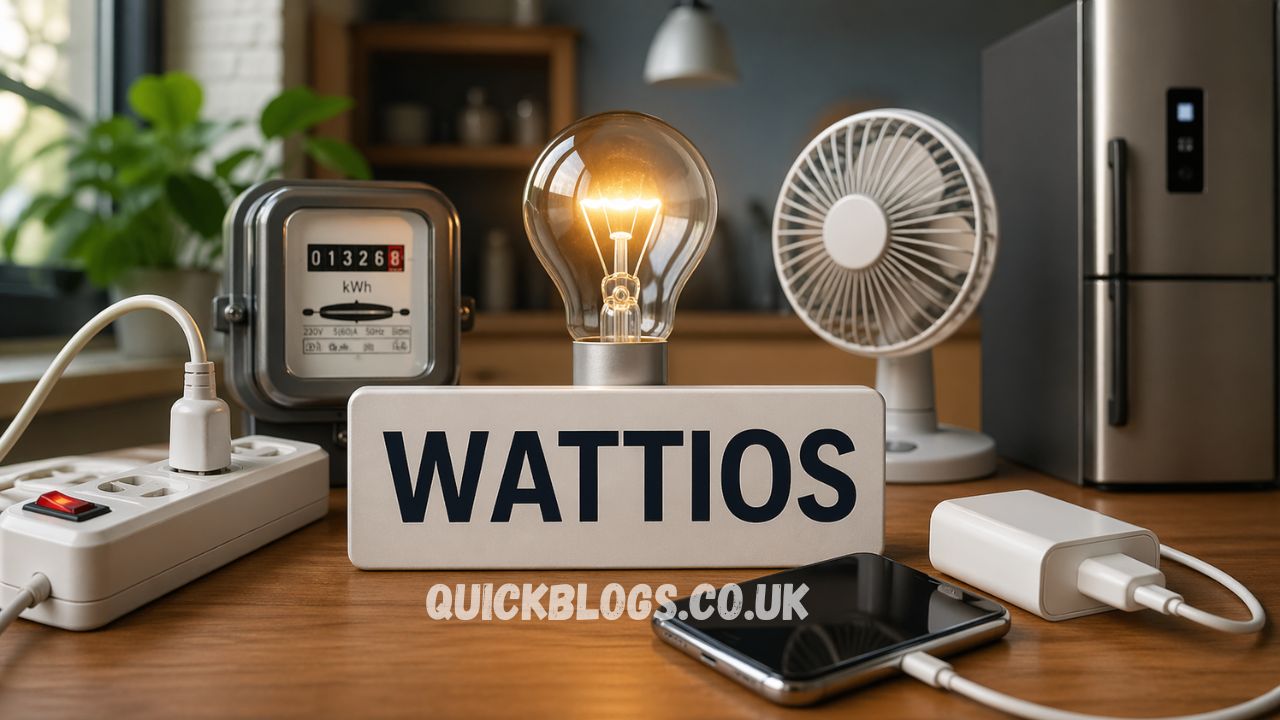
Wattios become much easier to understand when you look at common household items. Every device you use has a wattios rating that indicates how much power it needs to operate. These numbers vary widely depending on the function of the appliance. Smaller devices usually consume fewer wattios, while larger machines require significantly more.
Here are some typical examples:
- Phone charger: 5 to 20 wattios
- LED light bulb: 8 to 15 wattios
- Ceiling fan: 70 to 100 wattios
- Refrigerator: 150 to 400 wattios
- Air conditioner: 1000 wattios or more
These examples show how wattios directly relate to energy demand. A higher wattios rating usually means higher electricity usage if the device runs for long periods. This is why large appliances often contribute the most to electricity bills. Paying attention to wattios helps you identify which devices consume the most power.
wattios vs energy consumption explained clearly
One of the most common misunderstandings is the difference between wattios and total energy usage. Wattios measure power at a specific moment, while energy consumption is measured over time. This is where units like kilowatt-hours come into play. If wattios tell you how fast energy is being used, kilowatt-hours tell you how much energy has been used overall.
For example, a 1000-watt appliance running for one hour consumes one kilowatt-hour of electricity. If the same device runs for two hours, the consumption doubles. This distinction is important when reading electricity bills. Many people confuse wattios with total usage, which leads to misunderstandings about costs.
Understanding this difference helps in managing energy use more effectively. You can reduce consumption by either lowering the wattios of devices or reducing the time they are used. Both approaches can lead to noticeable savings. This is where awareness starts to turn into practical action.
why wattios matter when buying appliances
When purchasing new electronics or appliances, wattios should be one of the first things you check. It gives you a quick idea of how much power the device will require. Higher wattios often mean better performance, but they also mean higher energy consumption. Balancing performance and efficiency is key when making smart buying decisions.
For example, two similar appliances might perform the same task but use different wattios. Choosing the one with lower wattios can save money over time. This is especially important for devices that run continuously, such as refrigerators or air conditioners. Even small differences in wattios can add up over months.
Looking at wattios also helps you avoid overloading electrical circuits. Each circuit in your home has a limit, and exceeding it can cause problems. By understanding wattios, you can distribute power usage more safely. This reduces the risk of electrical issues and improves overall efficiency.
how wattios impact your electricity bill
Electricity bills are directly influenced by how much power your household consumes, and wattios play a central role in that equation. While the bill itself is calculated in kilowatt-hours, wattios determine how quickly those units add up. Devices with higher wattios use energy faster, which leads to higher costs over time.
Several factors affect how wattios influence your bill:
- Duration of use
- Number of devices running simultaneously
- Efficiency of appliances
- Seasonal usage patterns
For instance, using a high-wattios air conditioner for several hours daily can significantly increase your monthly bill. On the other hand, switching to energy-efficient devices can reduce overall consumption. Monitoring wattios helps you identify where most of your electricity is going. This awareness makes it easier to control expenses.
practical ways to reduce wattios consumption at home
Reducing wattios usage doesn’t mean giving up comfort; it means using energy more wisely. Small changes in daily habits can lead to noticeable savings over time. The key is to focus on both efficiency and usage patterns. By doing so, you can lower energy consumption without sacrificing convenience.
Here are some practical steps:
- Switch to energy-efficient appliances
- Turn off devices when not in use
- Use natural lighting during the day
- Limit usage of high-wattios appliances
- Maintain appliances for better efficiency
These actions may seem simple, but they can have a strong impact. Lowering wattios usage reduces strain on your electrical system as well. Over time, this also extends the lifespan of your devices. It’s a practical approach that benefits both your wallet and your home.
understanding wattios in modern energy solutions
As technology evolves, wattios continue to play an important role in modern energy systems. From solar panels to backup generators, power measurement remains essential. These systems rely on wattios to determine capacity and performance. Without understanding wattios, it becomes difficult to choose the right setup.
For example, solar panels are rated based on how many wattios they can produce under ideal conditions. Similarly, inverters and batteries are designed to handle specific wattios loads. Choosing the wrong capacity can lead to inefficiency or system failure. This is why wattios knowledge becomes even more important in advanced setups.
With the rise of renewable energy, more people are paying attention to wattios than ever before. It helps in planning energy usage and optimizing performance. Whether you’re setting up a small backup system or a full solar solution, wattios remain a key factor. This makes them relevant not just for homes, but for future energy planning as well.
conclusion
Wattios are more than just a technical term; they are a practical way to understand how electricity works in daily life. From small devices to large appliances, wattios help measure power usage at every moment. Knowing how wattios relate to energy consumption, appliance performance, and electricity costs gives you better control over your usage. It also helps you make smarter decisions when buying or using electrical devices. By paying attention to wattios, you can reduce waste, lower bills, and improve efficiency without major changes. In the end, a clear understanding of wattios turns everyday electricity use into something you can manage with confidence.
faqs
- what are wattios in simple words
Wattios measure how much electrical power a device uses at a specific moment. It shows how quickly energy is being consumed. - is wattios the same as watts
Yes, wattios and watts refer to the same unit of power. The difference is mainly in language usage. - how do wattios affect electricity bills
Higher wattios devices consume energy faster, which increases total electricity usage over time and raises bills. - how can i reduce wattios usage at home
You can reduce wattios by using energy-efficient appliances, turning off unused devices, and limiting high-power equipment usage. - why is understanding wattios important
Understanding wattios helps you manage energy consumption, choose better appliances, and avoid unnecessary electricity costs.