









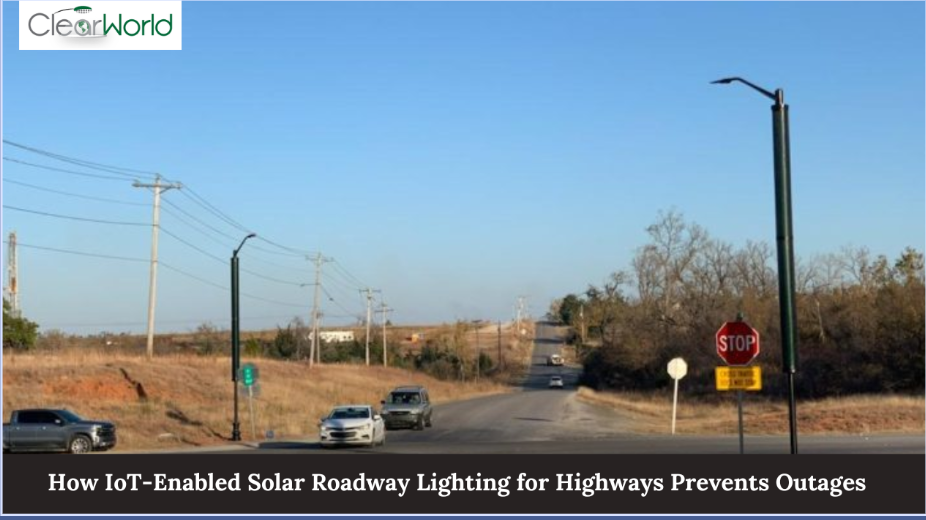
Highway lighting failures rarely make the news, but the damage they cause to infrastructure budgets is very real. Manual inspections, unpredictable utility bills, and reactive repair cycles quietly drain resources that transportation agencies can never fully recover.IoT-Enabled Solar Roadway Lighting For Highways is emerging as the smarter path forward, replacing the old inspect-and-repair routine with systems that monitor themselves. This blog walks through why traditional systems keep losing the cost battle, what makes the IoT-solar approach genuinely different, and what any agency or municipality should look for when choosing the right provider.
The Hidden Operational Costs of Traditional Highway Lighting
Most transportation agencies know their highway lighting costs money. What they often underestimate is how much of that cost has nothing to do with the energy bill.
Grid-tied highway lighting systems depend entirely on physical inspections to catch problems. A failed light on a rural interchange typically goes unnoticed until a driver reports it or, worse, until an incident draws attention to the darkness. By that point, a maintenance crew has to drive to the location, assess what went wrong, source replacement parts, and schedule a second visit to complete the repair. Repeat that cycle across a large highway network, and the labor cost alone becomes substantial. Add underground wiring repairs, utility coordination delays, and energy bills that have no ceiling, and the operational picture gets difficult fast.
Here is where traditional systems consistently bleed money:
Manual Inspection Cycles: Grid-tied systems cannot report their own failures. Maintenance teams find out about problems either through public complaints or scheduled patrols. Both methods consume significant time and labor, and neither catches problems early enough to prevent dark stretches of highway from putting drivers at risk.
Underground Wiring Vulnerability: Buried copper wiring is both an operational liability and a persistent theft target. When wiring is damaged or stolen, the repair process pulls in trenching crews, replacement materials, utility approvals, and scheduling delays. Highway stretches can sit dark for days before everything lines up for a repair.
Unpredictable Energy Costs: Utility rates move on their own schedule, and grid-connected lighting has no way to absorb those shifts. Budget forecasting becomes unreliable, and agencies frequently face energy invoices that outpace what was allocated at the start of the fiscal year.
How IoT-Enabled Solar Roadway Lighting For Highways Addresses These Problems
Understanding how that works in practice starts with looking at what these systems are actually made of. Common Technical Components in IoT-Enabled Solar Highway Lighting. A well-built IoT-Enabled Solar Roadway Lighting For Highways system is not a collection of separate parts bolted together. It is an integrated unit where every component works in coordination with the others.
Photovoltaic Solar Panels
manage energy collection from early morning through the afternoon hours. Each panel is sized to match the specific lighting demands of its corridor and the solar conditions of that region. Highway-grade panels handle wind loads, seasonal daylight variation, and temperature changes without needing manual calibration or adjustment in the field.
Lithium-Ion Battery Storage
receives the energy collected during the day and holds it for nighttime use. Battery management systems built into the unit track charge levels, regulate draw cycles, and prevent over-discharge. This extends the useful life of the battery significantly compared to older storage methods and reduces how often components need to be replaced over the system’s operational lifespan.
LED Luminaires handle the actual lighting.
They cover road surfaces more uniformly than older high-pressure sodium fixtures, consume considerably less energy to produce that output, and carry service lives that are measured in decades. For highway agencies managing large pole counts, the reduction in bulb replacement frequency alone represents a meaningful operational shift.
IoT Controllers and Wireless Communication
These are what elevate these systems beyond standard solar lighting. Embedded controllers track every measurable variable, including panel output, battery condition, LED performance, and ambient temperature. That data transmits wirelessly to a centralized management dashboard. Maintenance coordinators can see the status of every pole on their network without dispatching a single vehicle to the field. When performance drops below an acceptable threshold, the system sends an alert.
Adaptive Dimming and Motion Response
Complete the intelligence layer. Sensors detect vehicle movement and ambient light levels, allowing the system to adjust brightness based on what is actually happening on the road rather than running at full output all night regardless of traffic. This conserves battery reserve, extends component life, and keeps lighting responsive to real conditions.
What to Look for in a Quality IoT-Enabled Solar Roadway Lighting For Highways Provider
Not every provider in this space offers the same depth of technology or the same commitment to long-term performance. Agencies evaluating their options should pay close attention to a few defining qualities.
- A good provider attaches IoT-solar systems to existing poles rather than requiring full pole replacement, which keeps installation costs and project timelines realistic for highway-scale deployments.
- Real-time remote monitoring, fault alerts, and wireless programming should come as core features rather than optional upgrades.
- Systems should be scalable in panel capacity and battery specifications to match the actual lighting demands of each corridor rather than applying a single configuration across every installation.
- Adaptive dimming and motion-sensing integration should be built in, not added later, because traffic-responsive lighting is central to what makes these systems efficient over time.
- Hardware should be rated for demanding outdoor conditions, including high wind loads, temperature extremes, and extended periods of reduced sunlight without compromising consistent illumination.
Conclusion
IoT-Enabled Solar Roadway Lighting For Highways solves the problems that grid-tied systems were simply not built to handle. Reactive maintenance, rising energy costs, and zero self-reporting capability all belong to an older infrastructure model that highway agencies are actively moving away from. These smart solar systems give corridors something they have long needed: lighting that communicates its own condition.